
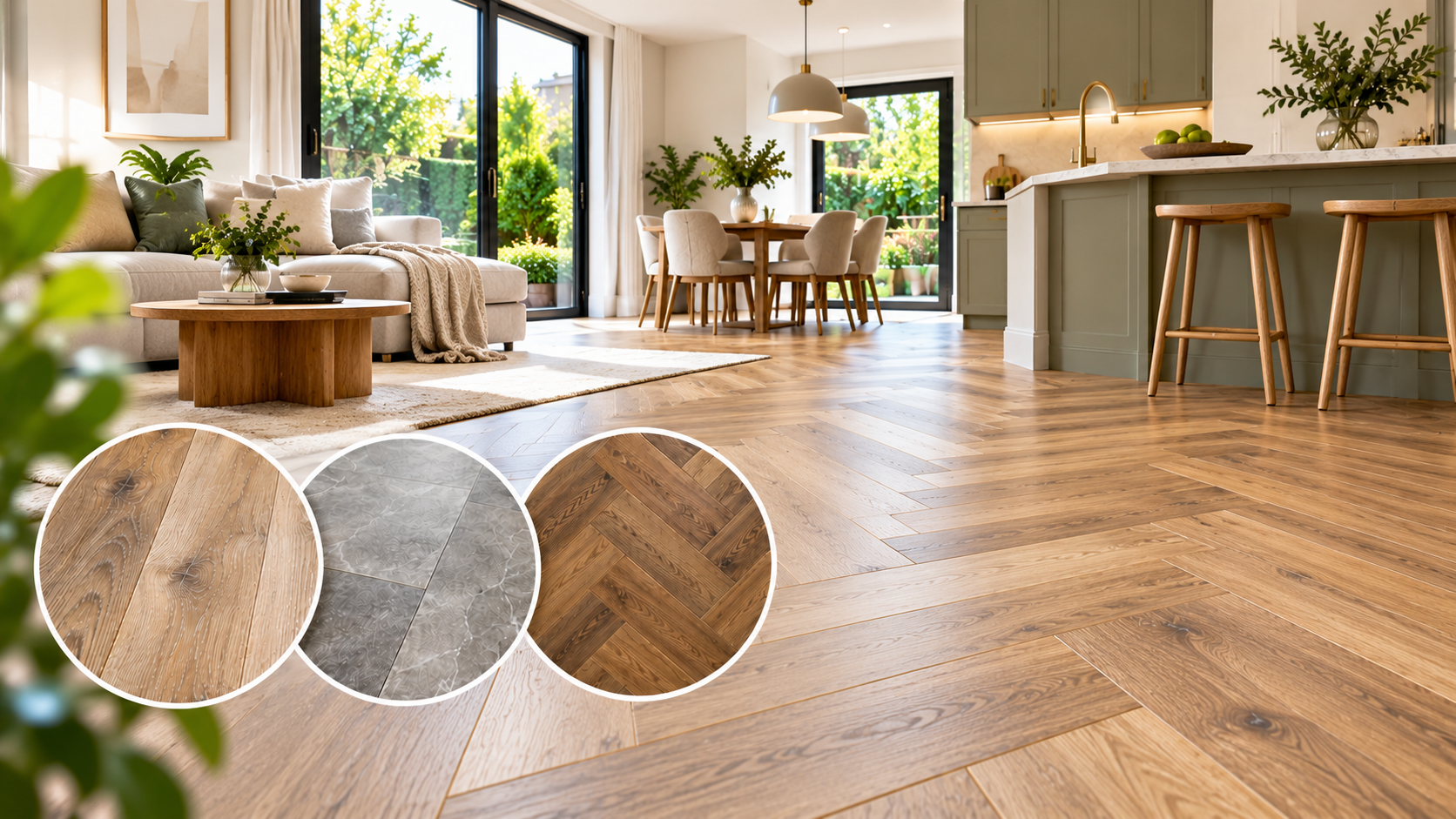
Choosing new flooring can make a noticeable difference to how your home looks and works every day. Whether you are updating a busy kitchen, replacing worn hallway flooring or renovating an entire property in Thames Ditton, you want a surface that looks attractive without becoming difficult to maintain.
Luxury Vinyl Tile (LVT) has become a popular option for homeowners who want the appearance of natural wood or stone alongside everyday practicality. It is available in a wide range of colours, textures, plank sizes and patterns, making it suitable for many contemporary and traditional interiors.
However, choosing the right LVT involves more than selecting a design. The installation method, subfloor condition, room usage, moisture exposure and quality of the product all influence the finished result. If you are considering a luxury vinyl flooring installation in Thames Ditton, this guide explains what you should know before starting. We cover the different types of LVT, the benefits, installation methods, preparation requirements, costs and questions worth asking your flooring installer.
Surbiton Carpet & Flooring supplies and fits luxury vinyl flooring, including LVT and SPC options, across Thames Ditton and surrounding areas. With free home measuring, product advice and professional installation, the team can help you find a flooring solution that suits your property and budget.
Why Are More Homeowners Considering Luxury Vinyl Flooring?
Flooring needs have changed as homes have become more multifunctional. Kitchens often connect directly to dining areas, hallways experience constant foot traffic, and living spaces need to accommodate children, pets and everyday activities.
Traditional flooring materials can involve compromises. Natural wood provides warmth and character but needs appropriate care around moisture. Ceramic tiles are durable but can feel hard and cold underfoot. Carpet offers comfort but may not be the preferred option in areas where spills and frequent cleaning are concerns.
Luxury vinyl flooring offers another option. Modern LVT designs reproduce the appearance of materials such as oak, walnut, marble, slate and concrete. Textured surfaces and detailed patterns can create a convincing visual effect without using the natural material itself.
For example, a family renovating a Thames Ditton kitchen might choose oak-effect LVT to complement wooden cabinets and create a consistent appearance with the adjoining dining area. A landlord updating a rental property may prefer a practical stone-effect design that is straightforward to clean and maintain.
The important point is that LVT is not one single product. Construction, wear-layer thickness, fitting system and manufacturer specifications vary between ranges. Choosing the right product for the room is just as important as choosing the colour.
What Is Luxury Vinyl Flooring?
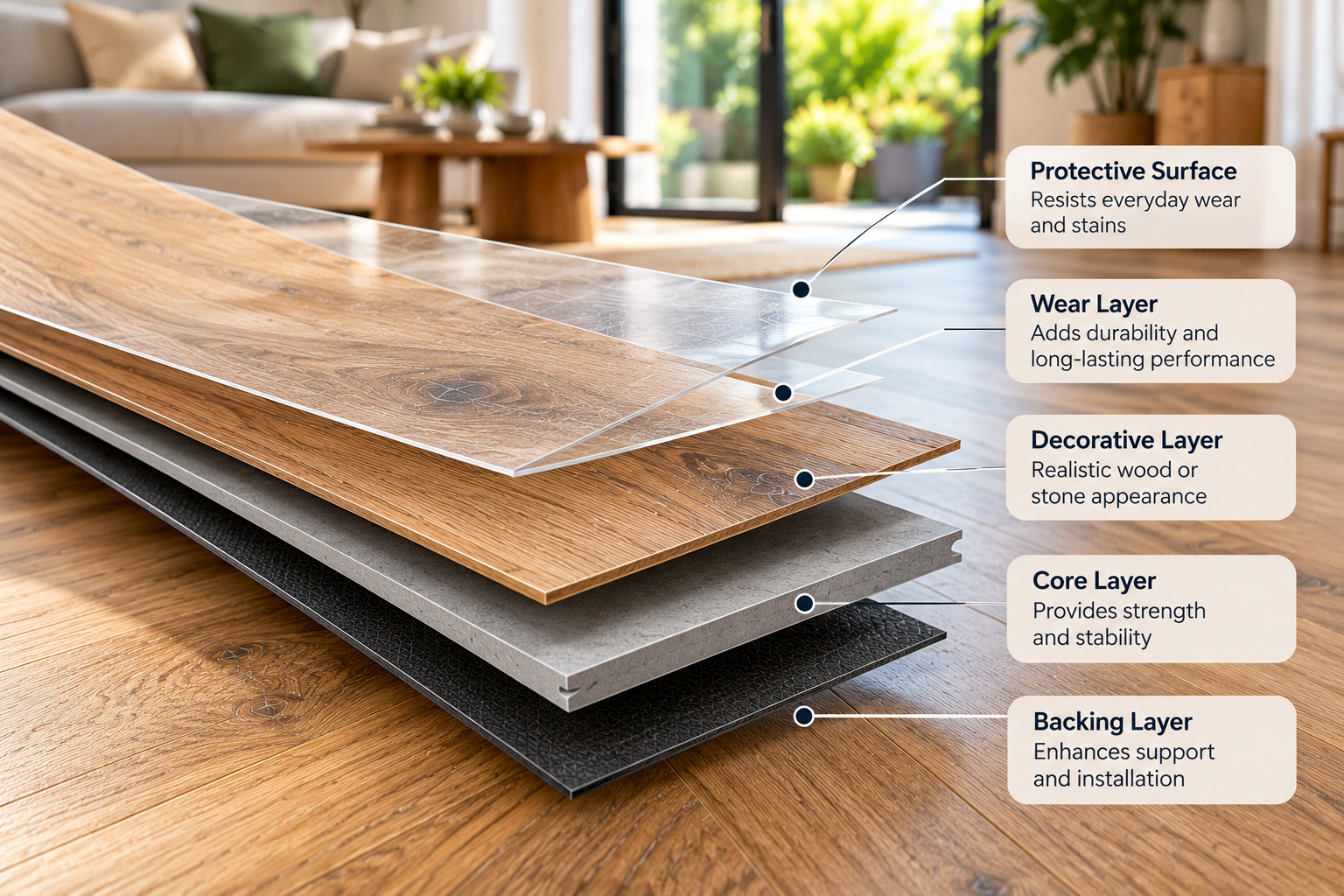
Luxury Vinyl Tile, commonly known as LVT, is a multi-layer vinyl flooring product designed to provide an attractive, durable surface for residential and commercial interiors. Unlike traditional vinyl flooring supplied in large rolls, LVT is generally available as individual planks or tiles. These can be arranged in different layouts to create wood-effect, stone-effect or decorative flooring designs.
A typical LVT product includes several functional layers:
Protective surface: Helps protect the floor from everyday wear, marks and staining.
Wear layer: Provides an additional protective layer, with its specification influencing the product's suitability for different levels of use.
Decorative layer: Creates the printed wood, stone or tile appearance.
Core construction: Provides the body and structure of the flooring, depending on the product type.
Backing layer: Supports the product and contributes to its overall construction.
The exact construction differs between manufacturers and product ranges, so it is worth checking the technical specification before purchasing.
LVT is available in two main installation systems: glue-down and click-fit. SPC rigid-core flooring is another option often considered alongside LVT. Understanding the differences helps you choose a floor that suits your room, subfloor and installation requirements.
Types of Luxury Vinyl Flooring to Consider
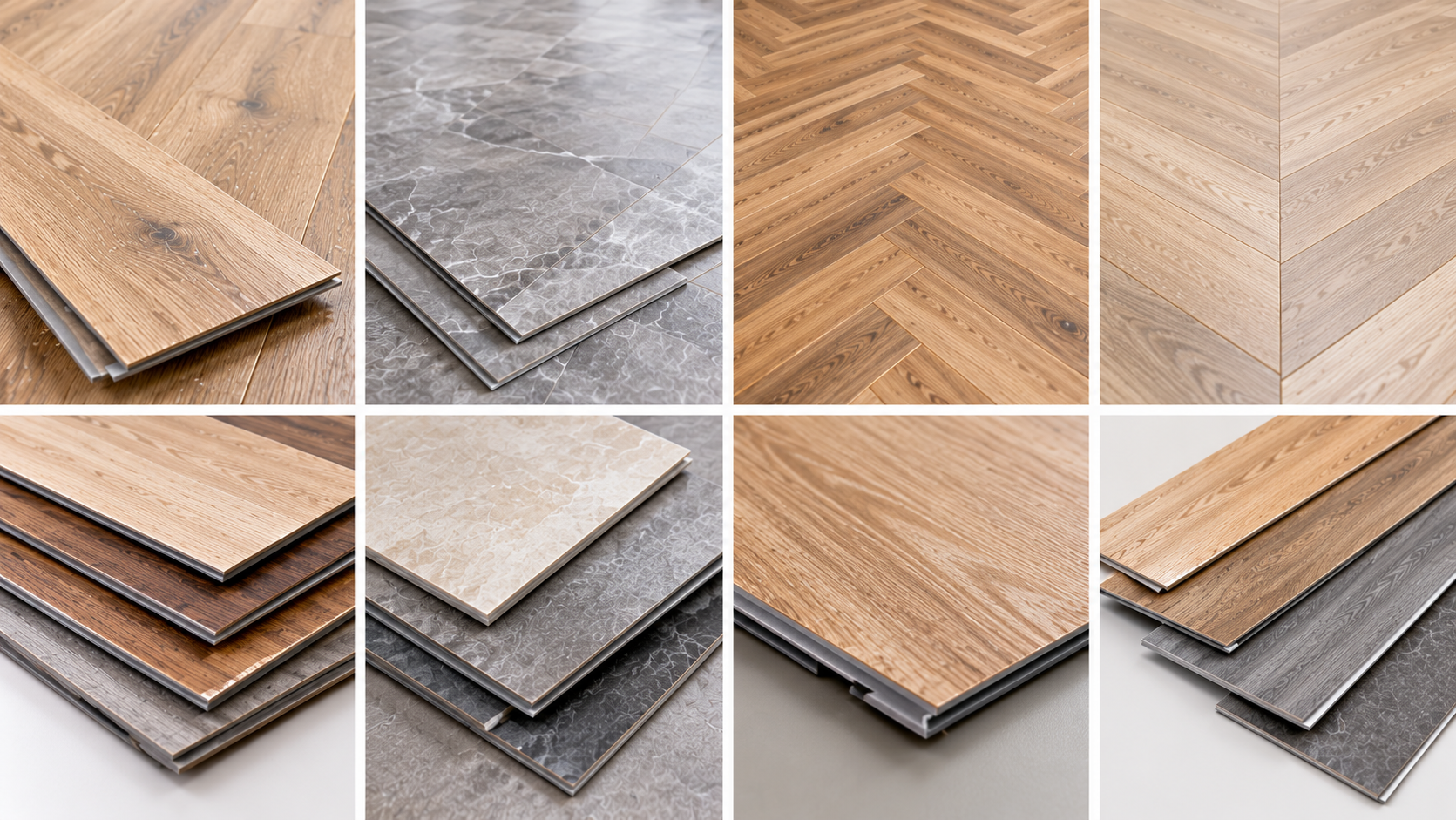
One of the main advantages of LVT is the choice of designs available. You do not have to settle for a single standard vinyl appearance. Different formats and patterns can create very different effects.
Wood-Effect LVT Flooring
Wood-effect LVT is a popular choice for people who like the appearance of timber but want a vinyl flooring alternative. Designs can reproduce the grain, knots and colour variations associated with natural wood. Options range from pale Scandinavian-style oak to warmer honey tones and darker walnut-inspired finishes. This style works particularly well in living rooms, bedrooms, hallways and open-plan spaces.
For example, light oak-effect planks can complement neutral walls and contemporary furniture, while darker wood-effect flooring may suit a more traditional interior. If you want a consistent appearance across connected rooms, plank LVT can help create a visual flow between spaces, provided the product and installation layout are suitable.
Stone-Effect LVT Flooring
Stone-effect LVT recreates the appearance of materials such as slate, limestone, marble and concrete. It can be a good option for kitchens, utility rooms and contemporary interiors where a clean, structured finish is preferred.
Unlike real stone, LVT is generally softer underfoot and does not require the same type of sealing as natural stone. However, cleaning and maintenance should always follow the product manufacturer's instructions.
Herringbone LVT Flooring
Herringbone is a decorative pattern created by arranging rectangular planks in alternating directions. It can introduce more detail into a room without relying on bold colours or complicated decoration. The pattern is particularly effective in hallways, dining areas and living rooms.
Some LVT ranges are specifically designed for herringbone installation, with suitable left- and right-hand planks or dedicated pattern components. Because the layout requires careful alignment and cutting, professional planning is important. An accurately positioned starting point helps keep the pattern balanced across the room.
Chevron and Decorative LVT
Chevron flooring creates a continuous V-shaped pattern, giving a more geometric appearance than traditional herringbone. Other decorative options include basketweave layouts, borders and contrasting feature strips.
These designs can work well in properties where flooring is intended to become a noticeable part of the interior design. However, more complex layouts may require additional material and fitting time. Surbiton Carpet & Flooring offers plank, herringbone and textured LVT options, including stone-effect designs. You can explore the available choices on the luxury vinyl flooring supply and fitting page.
Glue-Down LVT vs Click LVT and SPC: Which Should You Choose?
One of the most important decisions before installation is choosing the right fitting system. Glue-down LVT and click-fit flooring are not interchangeable in every situation. Each has different installation requirements and advantages.
| Feature | Glue-down LVT | Click SPC flooring |
|---|---|---|
| Construction | Real wood top layer over a multi-layer core | Timber throughout the board |
| Installation | Individual tiles or planks are adhered to the prepared subfloor | Boards connect using a click-lock joint |
| Subfloor requirements | Requires a very smooth, properly prepared surface | Rigid core can accommodate minor imperfections within product limits |
| Layout options | Well suited to detailed patterns, borders and feature strips | Available in various plank and pattern designs, depending on the range |
| Installation planning | Requires careful adhesive application and layout | Requires accurate starting points, expansion allowances and joint alignment |
| Typical consideration | Excellent option for detailed layouts and stable installation | Can offer a quicker installation process on suitable subfloors |
When Is Glue-Down LVT Suitable?
Glue-down LVT is often worth considering when you want a stable finish and detailed design. It is particularly useful for herringbone layouts, decorative borders and feature strips. Because the tiles or planks are bonded to the prepared subfloor, the installation depends heavily on the quality of the base. Uneven areas, dust, moisture or surface contamination can affect the result. Proper preparation is therefore essential.
When Should You Consider Click SPC Flooring?
SPC stands for Stone Plastic Composite, also commonly described as Stone Polymer Composite. It uses a denser rigid core, often incorporating limestone-based material. Click SPC boards connect through a locking system rather than being individually glued to the floor.
This can make installation faster in suitable conditions. The rigid core may also help accommodate minor surface imperfections, but it does not eliminate the need for a properly assessed and prepared subfloor. The best option depends on the room, product specification, existing floor and desired finish. A professional assessment can help determine which system is appropriate.
What Problems Can LVT Flooring Installation Solve?
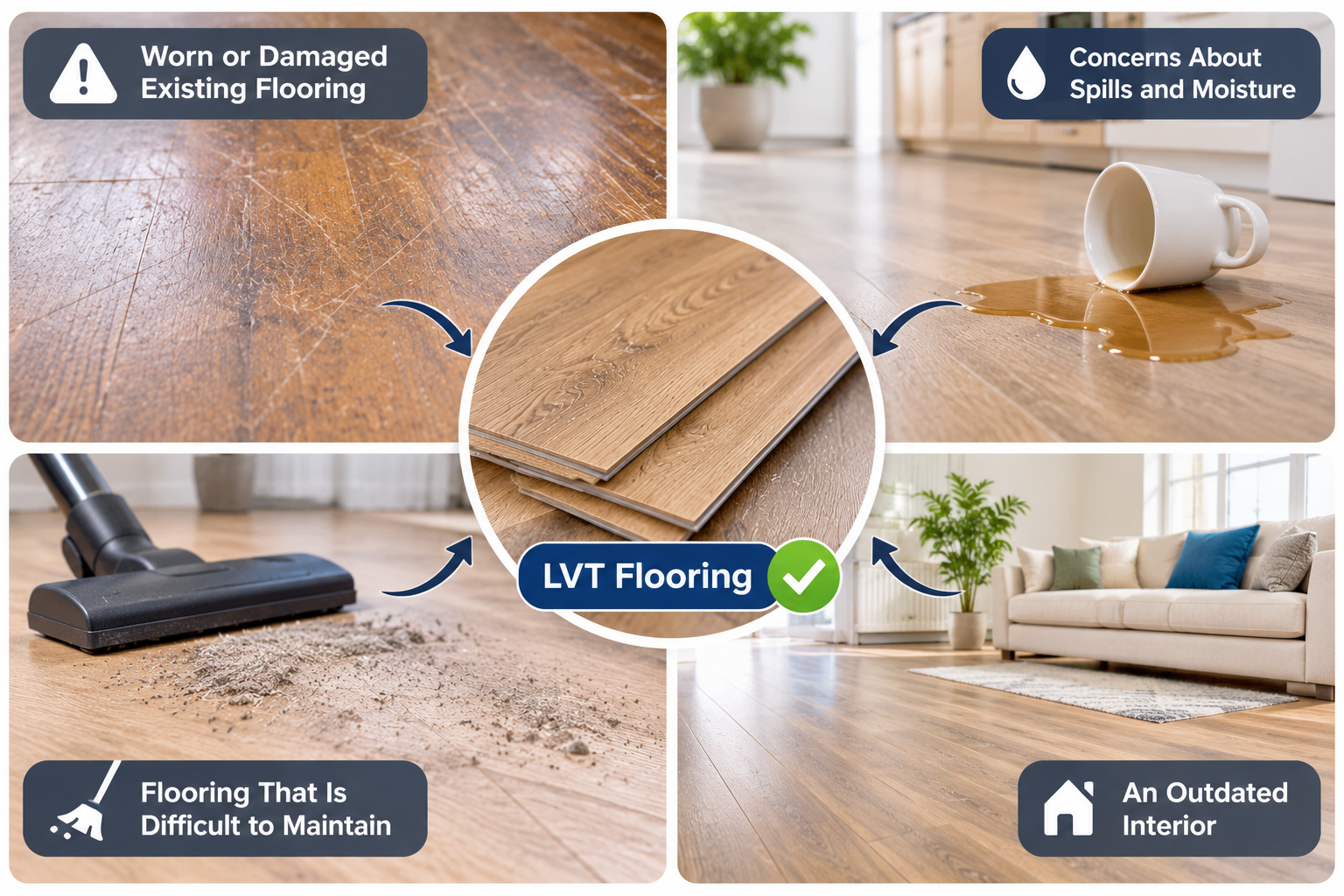
A flooring upgrade is often driven by a practical problem rather than simply wanting a different appearance.
Worn or Damaged Existing Flooring
Old vinyl, damaged laminate or heavily marked flooring can make an otherwise attractive room look tired. Replacing it with a suitable LVT product can give the space a fresh appearance while providing a surface designed for everyday use. Before installation, the existing flooring and subfloor should be checked to establish whether removal, repairs or preparation are required.
Concerns About Spills and Moisture
Kitchens, utility rooms and bathrooms experience more moisture than most other areas of a property. Carpet and some wood-based flooring products may not be the most suitable choices for these environments.
Many LVT and SPC ranges offer water-resistant or waterproof product construction, making them suitable options for selected moisture-prone rooms. However, this does not mean every installation is completely waterproof.
Perimeter sealing, joints, transitions and manufacturer instructions all matter. Standing water and moisture entering beneath the floor can still cause problems if the installation is unsuitable.
Flooring That Is Difficult to Maintain
Some flooring surfaces require more attention than others. If you have a busy household, you may prefer a floor that can be cleaned using straightforward everyday methods. LVT is generally easy to maintain with regular sweeping or vacuuming and cleaning using products approved by the manufacturer. This can be especially helpful in hallways, kitchens and dining areas where dust, food particles and everyday marks accumulate.
An Outdated Interior
Sometimes the main issue is simply that the existing floor no longer matches the way you want your home to look. For example, replacing an old patterned floor with pale oak-effect LVT can help modernise a kitchen without changing the cabinets. Stone-effect LVT can also give a utility room a cleaner, more contemporary appearance. Choosing the right design can make a noticeable difference without requiring a complete interior renovation.
Benefits of Professional LVT Flooring Installation
Selecting a good flooring product is only part of the project. The quality of installation has a direct impact on the appearance and performance of the finished floor.
A More Accurate and Consistent Finish
Professional fitting helps ensure that planks or tiles are aligned correctly, patterns are balanced and cuts are made accurately around doorways, corners and fixtures. This is particularly important with herringbone and chevron layouts, where small alignment errors can become noticeable across the room.
Better Subfloor Preparation
Subfloor preparation is one of the most important stages of an LVT installation. A floor may look reasonably flat but still have small ridges, hollows, cracks or moisture issues. These imperfections can affect the finished appearance, especially with glue-down LVT. A professional assessment helps identify whether the surface needs levelling, smoothing, repairs or moisture protection.
Correct Product and Installation Selection
Different products have different requirements. Some are designed for glue-down installation, while others use click systems. Professional advice can help you avoid selecting a product that is unsuitable for the room, subfloor or expected level of use.
Neat Finishing Details
A quality installation should consider more than the main floor area. Doorway transitions, skirting edges, thresholds, expansion allowances and cuts around fixed features all contribute to the finished appearance. These details can be easy to overlook when comparing flooring prices, but they make a noticeable difference once the room is complete.
How Much Does LVT Flooring Installation Cost in Thames Ditton?
The cost of luxury vinyl flooring installation depends on the product, room dimensions and amount of preparation required. There is no single installation price that applies to every property. A straightforward rectangular room with a suitable subfloor will have different requirements from a hallway with several doorways or a large kitchen requiring detailed pattern work.
| Cost factor | Why it matters |
|---|---|
| Product selection | Brand, design, construction and wear-layer specification influence material costs |
| Room size | Larger areas require more flooring, although cutting allowances must also be considered |
| Installation system | Glue-down LVT and click SPC involve different preparation and fitting requirements |
| Pattern | Herringbone, chevron and decorative layouts may require additional labour and cutting |
| Subfloor condition | Levelling, smoothing, repairs and moisture protection can add to the project cost |
| Existing flooring | Uplift and removal may be required before the new floor can be fitted |
| Finishing work | Door bars, trims, skirting details and transitions may affect the final quotation |
For example, installing straightforward plank LVT in a bedroom may involve less preparation and fitting time than laying a herringbone design throughout an open-plan kitchen and dining area. If the existing floor is uneven, the installer may also recommend additional preparation before the new product is fitted.
When comparing quotations, check whether the price includes the flooring, preparation, adhesive or underlay where applicable, installation, trims, removal and waste disposal. A lower initial price may not represent the complete project cost. The most reliable way to understand your budget is to arrange a home measurement and receive a quotation based on the actual property
Good preparation helps prevent avoidable problems and allows the installation team to work efficiently.
1. Assess the Existing Floor
The existing flooring should be inspected before deciding whether it needs to be removed. The installer will need to consider the type of subfloor, its condition, surface stability and any signs of dampness.
2. Check Moisture Levels
Moisture is an important consideration, particularly when installing glue-down LVT over concrete or screed. A suitable moisture assessment can identify whether additional protection or drying time is required. The appropriate test and acceptable moisture limits depend on the subfloor, adhesive and flooring manufacturer's instructions.
3. Level and Smooth the Subfloor
Glue-down LVT requires a particularly smooth base because surface imperfections can show through the finished floor. Preparation may involve repairing cracks, removing adhesive residue, applying suitable smoothing compounds or installing an appropriate overlay. Click SPC flooring can accommodate minor imperfections within the product's stated limits, but it should not be used to hide major unevenness.
4. Plan Doorways and Floor Heights
The finished floor height needs to be considered alongside adjoining rooms, doors, skirting boards and existing thresholds. For example, if a new LVT is installed over an existing floor, the increased height could affect door clearance or create an uneven transition into the next room. Measuring these details before installation helps avoid last-minute adjustments.
5. Follow the Product's Installation Requirements
Some flooring products require specific acclimatisation, temperature conditions or storage arrangements before fitting. The manufacturer's instructions should be followed rather than assuming every LVT product is installed in the same way. Surbiton Carpet & Flooring provides a measuring and planning service that includes room measurements, subfloor checks, layout advice and guidance on suitable flooring options.
Choosing LVT Flooring for Different Rooms
The best flooring choice depends on how each room is used.
| Room | Suitable LVT considerations | What to prioritise |
|---|---|---|
| Kitchen | Wood-effect or stone-effect LVT/SPC | Water resistance, cleaning and suitable perimeter detailing |
| Bathroom | Product specifically approved for bathroom use | Water-resistant construction, sealing and installation guidance |
| Hallway | Durable glue-down LVT or suitable SPC | Wear-layer specification and resistance to everyday traffic |
| Living room | Wood-effect planks or herringbone | Appearance, comfort and coordination with furniture |
| Bedroom | Natural oak or softer neutral designs | Appearance, underfoot feel and compatibility with underfloor heating |
| Utility room | Suitable LVT or SPC | Moisture resistance and straightforward cleaning |
Kitchens and Utility Rooms
These spaces often experience spills, dirt and frequent movement. A suitable LVT or SPC product can provide an attractive alternative to some traditional flooring materials. Pay particular attention to water resistance, perimeter details and cleaning instructions.
Bathrooms and WCs
LVT can be suitable for bathrooms when the selected product and complete installation system are approved for the environment. However, water resistance should not be confused with a guarantee against water penetration. Correct joints, perimeter sealing and preparation are important.
Hallways and Open-Plan Areas
Hallways experience frequent foot traffic, while open-plan spaces may connect several areas with different uses. A continuous LVT design can help create a consistent appearance. For busy areas, ask about the wear-layer specification and the manufacturer's recommended application.
Living Rooms and Bedrooms
Wood-effect LVT can work particularly well in these rooms when you want the appearance of timber with a practical vinyl surface. Herringbone and plank layouts can both complement modern and traditional interiors.
Is LVT Suitable for Underfloor Heating?
Many LVT and SPC products are compatible with underfloor heating, but compatibility must be checked for the specific product and heating system. The manufacturer may specify a maximum floor-surface temperature, a particular installation method and requirements for gradual heating.
Adhesives and preparation materials used with glue-down flooring may also need to meet the heating system's requirements. If your Thames Ditton property already has underfloor heating, mention this before choosing your flooring. It allows the supplier to recommend products and installation materials that are appropriate for the system.
Why Choose Surbiton Carpet & Flooring for LVT Installation in Thames Ditton?
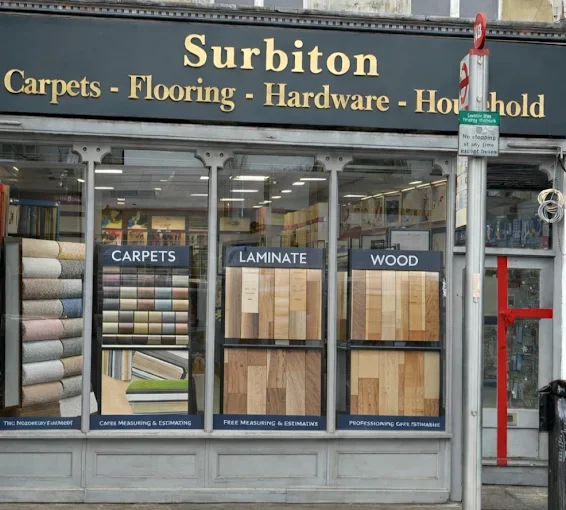
Choosing a local flooring specialist means you can discuss your requirements with a team that understands the importance of product selection, measuring and professional fitting. Surbiton Carpet & Flooring supplies and fits Luxury Vinyl Tile and SPC flooring across Surbiton, Thames Ditton, Kingston, Esher and surrounding areas.
The company's LVT service includes glue-down and click systems, herringbone designs, wood-effect finishes and stone-effect flooring. It also covers design layout, subfloor preparation and professional installation.
Customers can benefit from:
Free home measuring and advice: The team can bring samples to your property, assess the floor and discuss suitable products.
Professional installation: Fully insured fitters carry out the installation and finishing work.
Subfloor preparation: The team can assess the existing surface and advise on preparation requirements before fitting.
Uplift and removal: Existing flooring removal can be included in the project quotation where required.
Product choice: Customers can compare different LVT and SPC styles, including plank, herringbone and textured stone-effect options.
Wear guarantee: The company advertises a wear guarantee on every floor. Ask for the specific terms and conditions for your selected product.
Surbiton Carpet & Flooring also states that it has more than 2,500 happy clients and offers a free, no-obligation home measure and quotation.
What to Expect During Your LVT Flooring Installation
Knowing what happens at each stage can make your renovation easier to plan.
Step 1: Initial consultation
Discuss the rooms you want to update, your preferred designs, budget and any practical concerns such as pets, underfloor heating or moisture exposure.
Step 2: Home measurement and product selection
A flooring specialist visits the property, measures the rooms and brings suitable samples. You can compare colours, textures and patterns in your own lighting.
Step 3: Subfloor assessment
The existing floor is checked for level, moisture, stability and other conditions that could affect the installation.
Step 4: Quotation and scheduling
You receive a quotation outlining the selected product, preparation requirements, fitting work and finishing details. Once approved, the installation can be scheduled.
Step 5: Preparation and installation
The existing flooring is removed if required, the subfloor is prepared and the selected LVT or SPC is installed according to the product instructions.
Step 6: Finishing and handover
The installer completes the edges, transitions and other finishing details, removes installation waste as agreed and provides appropriate care guidance.
For more information about the fitting process, visit the professional flooring fitting and installation page.
Frequently Asked Questions
-
Both are practical flooring options, but they have different constructions and characteristics. LVT has a vinyl-based construction and many ranges offer water-resistant or waterproof product specifications. Laminate generally uses a decorative layer over a wood-based core, although water-resistant products are available. The best option depends on the room, product specification and installation requirements.
-
Some LVT and SPC products are described as waterproof, while others offer water resistance. However, the complete installation must also be considered. Joints, edges, perimeter sealing and subfloor conditions can affect how well the flooring performs around moisture. Always check the specific manufacturer's guidance.
-
Traditional glue-down LVT uses flexible vinyl planks or tiles that are adhered to a prepared subfloor. SPC uses a denser rigid core and commonly has a click-lock installation system. Both offer wood-effect and stone-effect designs, but their preparation and fitting requirements differ.
-
Yes, many LVT and SPC ranges are suitable for kitchens. They offer practical surfaces that are generally straightforward to clean. Choose a product approved for the environment and make sure the installation follows the manufacturer's moisture and perimeter-sealing instructions.
-
Certain LVT and SPC products are suitable for bathrooms and WCs. However, the product must be approved for the intended environment, and the installation needs suitable joint and perimeter detailing. Ask your installer to confirm suitability before ordering.
-
Neither is automatically better. Glue-down LVT is particularly useful for detailed patterns and requires a very smooth subfloor. Click SPC can offer a quicker installation on suitable surfaces and may accommodate minor imperfections within its specification. Your room and subfloor condition should determine the choice.
-
It depends on the product. Many glue-down LVT products are installed directly onto a properly prepared subfloor using the specified adhesive. Some click systems may have an integrated backing, while others require a compatible underlay. Never use a general-purpose underlay without checking the manufacturer's instructions.
-
The installation time depends on the room size, fitting method, flooring pattern and subfloor preparation. A simple rectangular room may take less time than a large open-plan area with herringbone flooring. Your installer can provide a realistic schedule after assessing the property.
-
It may be possible, but the existing tiles must be stable, suitably level and appropriate for the selected installation system. With glue-down LVT, tile joints and surface irregularities may need smoothing so they do not show through the finished floor. A site assessment is recommended.
-
Regular sweeping or vacuuming helps remove dirt and grit. Clean the surface using a suitable vinyl flooring cleaner and follow the manufacturer's guidance. Avoid abrasive tools, harsh chemicals and excessive water, and use protective pads beneath furniture where appropriate.
-
Surbiton Carpet & Flooring lists Thames Ditton within its service area and supplies and fits LVT and SPC flooring. You can arrange a free home visit to discuss product options, measurements and a quotation.
Upgrade Your Property with Professional LVT Flooring in Thames Ditton
The right luxury vinyl flooring should do more than improve the appearance of a room. It should suit the way you use your home, provide a practical surface for everyday life and complement your interior for years to come. Whether you prefer natural oak-effect planks, a contemporary stone finish or a decorative herringbone pattern, choosing the correct product and installation system is essential.
Before committing to a new floor, consider the room's requirements, check the subfloor and compare the available designs with an experienced flooring specialist. Surbiton Carpet & Flooring can help you plan your project with product advice, free home measuring and professional installation in Thames Ditton and nearby areas. Arrange your free home measure and quotation today. Get expert advice and find an LVT flooring solution that works for your Thames Ditton property.
